'%20stroke-width='8'%20stroke-linecap='round'%20stroke-linejoin='round'/%3e%3ccircle%20cx='42'%20cy='83'%20r='4.25'%20fill='%23D6679A'/%3e%3ccircle%20cx='87'%20cy='58'%20r='4.25'%20fill='%23796BC4'/%3e%3cpath%20d='M94%2019l3.3%207.7L105%2030l-7.7%203.3L94%2041l-3.3-7.7L83%2030l7.7-3.3L94%2019Z'%20fill='%23BE892F'/%3e%3c/svg%3e)
为什么是 NovelForge
为什么是 NovelForge · 先看你的项目最难治理的到底是什么 直接小说系统 作者产品 架构差异 真实取舍 English · 文档中心


为什么是 NovelForge
Section titled “为什么是 NovelForge”NovelForge 并不想证明“别的小说系统没有记忆、没有 QA、没有读者模拟、没有多 Agent、没有长期一致性”。到了 2026 年,这些能力已经广泛出现在成熟作者产品和开源小说系统里。
它真正提出的是一个更窄的架构判断:
当一本小说跨越很多章节、会话、模型和修改轮次时,故事权威、模型语义判断、可恢复执行、质量证据,以及最终正典写入,应该始终是彼此分开的东西。
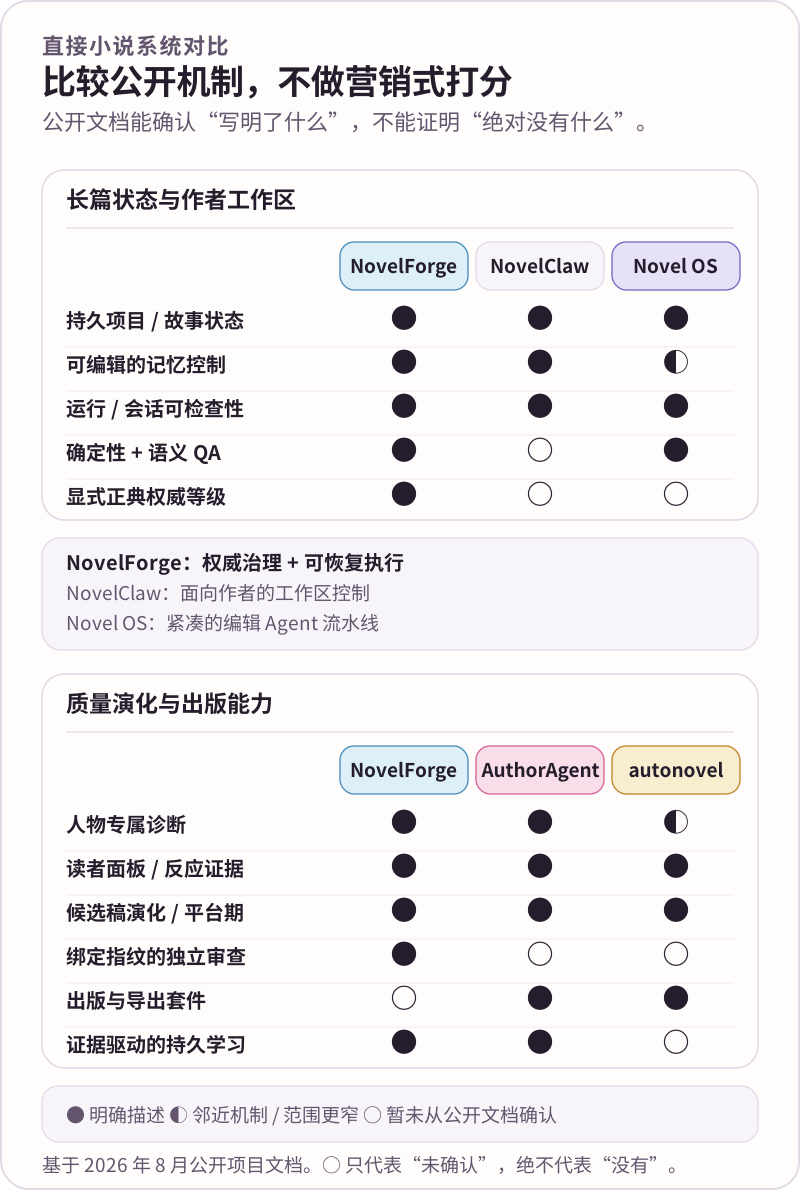
本页比较快照:2026 年 8 月 14 日。产品能力变化很快;“公开资料暂未确认”只表示这次没有从已检查的第一方材料确认,绝不等于“产品没有”。
01 · 最快的选择方法
Section titled “01 · 最快的选择方法”不要先数功能,先看哪个产品最擅长解决你的主要瓶颈。
Sudowrite 更适合把重点放在成熟作者体验的人:构思、规划、写作、改写、整理项目,以及用持久 Story Bible 让作者与 AI 共同参考同一套故事资料。
NovelCrafter 更适合需要结构化作者工作区的人:多种 planning view、Codex、系列间共享资料、协作,以及由作者决定 AI 要参与多少。
NovelClaw 更适合希望把长篇写作做成“可见工作台”的人:持续 session、run inspection、manuscript / storyboard、人物 / 世界 / style surface,以及可以直接查看和编辑的 memory bank。
Novel OS 更适合喜欢明确编辑团队模型的人:central StoryState、Architect → Scribe → Editor → Guardian → Curator 五角色、确定性 continuity pre-check + LLM Guardian、多 provider,以及比较完整的 browser writing studio / export。
AuthorAgent 更适合想要本地优先、一站式 author application 的人:从 planning / writing 到 evidence-chained quality check、人物 critic、candidate evolution、长期记忆、出版与导出都在同一套系统里。
autonovel 更适合想实验高度自动化全链路的人:seed → world / characters / outline / canon → sequential drafting → evaluation → reader-panel revision → plateau stopping → PDF / ePub / audiobook / landing。
NovelForge 更适合这样的项目:真正难的不是“再生成一版文字”,而是什么是真的、模型可以根据什么推断、什么状态应该跨 run 保留、哪类证据可以改变哪类状态、失败后应该回哪一层修,以及用户接受的正文什么时候才允许真正修改 Canon。
02 · NovelForge 真正不同的地方
Section titled “02 · NovelForge 真正不同的地方”NovelForge 最重要的差异不是某一个孤立 feature,而是 feature 之间的边界。
Story authority 明确分级
Section titled “Story authority 明确分级”NovelForge 明确区分 locked、accepted、active_plan、review 与 proposal,而不是把所有持久故事资料都装进一个统一“source of truth bucket”。
Session memory、model inference、review result、Corpus evidence、scenario branch 和 active plan 都是不同 authority class。
一本书只写几章时,这种严格程度可能显得麻烦;一本书跨几十、上百章之后,这种差异会越来越重要。
Canon mutation 是 transaction,不是“保存成功”
Section titled “Canon mutation 是 transaction,不是“保存成功””通过 QA 不会自动写正典;用户说“这一版可以”也不等于 write transaction 已经完成。
SETTLE 要求明确 accepted-artifact evidence、write authorization、before-state verification、精确 mutation intent、required projection receipt 与 postcondition。before-state mismatch 或 required projection failure 会得到 settlement_incomplete,而不是“差不多成功”。
这比把“保存进 memory / story bible”与“已经成为 Canon”当成同一回事更严格。
语义智能与确定性运行时故意分开
Section titled “语义智能与确定性运行时故意分开”当前开发架构把文学 / 叙事理解明确交给 model-readable semantic contracts,并按需渐进加载。
模型负责真正需要阅读理解的问题:人物行动、scene resolution、reader reaction、character integrity、revision diagnosis、long-horizon reconciliation、candidate comparison。
确定性代码负责真正应该精确的东西:permissions、fingerprints、persistence、session / checkpoint、result binding、consume-once、hard budget、rights gate、transaction 与 reproducible build。
Framework 因此不需要让一个 Python heuristic 假装自己是文学批评家。
人物行动先于“剧情方便”
Section titled “人物行动先于“剧情方便””story-simulation contract 可以先根据人物的 agenda、belief、knowledge、relationship 与 scene evidence 提出人物真正可能做什么,再解析人物行动之间的 scene-level collision。
目标不是让 AI 随机跑角色,而是避免 outline / manager 通过每个人物的嘴完成预定剧情。
Context 是稀疏、可检查、可控制的
Section titled “Context 是稀疏、可检查、可控制的”NovelForge 把 Project storage 与 prompt context 分开。Context / Memory 层确定性负责硬预算、provenance、authority class 与作者可见控制;真正需要解释“现在什么相关”时,可以由 semantic contract 判断。
Persistent memory 被当作受治理的 derived view,而不是“系统见过的东西以后就一直偷偷塞进 prompt”。
Quality 的核心是 failure routing,不是 critic 数量
Section titled “Quality 的核心是 failure routing,不是 critic 数量”Surface、Reader、Character、Story、Continuity、Context / Memory、Research 与 Runtime failure 有不同 repair owner。
场景语言很漂亮但完全没劲,可以回 Reader Pressure + Scene Simulation;人物失真回 Character Simulation;场景前提因果错误回 Story / Plan;reviewer 审错 fingerprint 回 runtime validation。
核心不是“多安排几个 critic”,而是把问题修在真正拥有它的机制上。
Revision 可以承认“这一版并没有更好”
Section titled “Revision 可以承认“这一版并没有更好””Quality Evolution 记录 candidate fingerprint 与 lineage。Model-owned comparison 可以保留 incumbent、接受 challenger,也可以返回 tie。Plateau stopping 允许系统在继续改已经没有真实收益时停止。
独立判断不是角色扮演
Section titled “独立判断不是角色扮演”Semantic judgment 与 independent judgment 是两回事。
只有 rubric 真正要求 independence 时,才要求 separate invocation / session、bounded packet、exact fingerprint binding、typed result,以及稿件实质变化后的 fresh review。有效的 semantic rejection 进入 repair,而不是换 reviewer 直到有人给 PASS。
多运行时,但 capability 永远不等于 authority
Section titled “多运行时,但 capability 永远不等于 authority”Current chat、peer chat、本地 Codex / Claude、provider API、MCP worker、GitHub job、本地模型或人工都可以成为 eligible execution route,只要当前 host 真正具备所需 capability。
但技术上“做得到”,永远不等于“有权写 Canon”。
Learning 必须一直受 evidence 约束
Section titled “Learning 必须一直受 evidence 约束”Preference hypothesis、Corpus observation、eval evidence 与 General Craft candidate 彼此分开。Learning 可以被反证、限定作用域、版本化、评测、通过明确 promotion gate 升级,也可以 rollback。
模型不能只猜一次“用户喜欢 X”,就把这个判断永久写进用户口味。
03 · 别的系统在哪些方面更强
Section titled “03 · 别的系统在哪些方面更强”NovelForge 并不是所有维度都领先。
成熟作者体验:Sudowrite / NovelCrafter
Section titled “成熟作者体验:Sudowrite / NovelCrafter”这两者首先是完整 author product,而不是 engineering framework。
Sudowrite 官方文档把 Story Bible 作为持久故事组织与 AI reference 的核心之一;NovelCrafter 提供 planning mode、Codex、series sharing、collaboration,以及作者自己控制 AI 参与程度。
NovelForge 当前仍然要求用户更接近 Project / runtime system,本身的 author-facing UI 明显没有这些成熟产品完整。
可见的长篇工作区:NovelClaw
Section titled “可见的长篇工作区:NovelClaw”NovelClaw 把长篇工作的很多状态直接放在 UI 上:sessions、run inspection、manuscript review、storyboard、world / character / style surface、editable memory bank、logs、chapter output 与 downloads。
NovelForge 目前更强调整套 authority / execution contract,而不是提供一个已经非常成熟的作者控制台。
一眼就能理解的编辑工作室:Novel OS
Section titled “一眼就能理解的编辑工作室:Novel OS”Novel OS 的 Architect → Scribe → Editor → Guardian → Curator 很直观,browser studio 也直接覆盖 plan / write / revise、continuity finding 与 export,同时公开支持很广的 provider layer。
NovelForge 刻意不把固定角色团队当作核心架构。好处是 failure routing 和 runtime 更灵活,代价是第一次看上去没有那么“像一个现成的写作工作室”。
Author / publishing 全链路:AuthorAgent
Section titled “Author / publishing 全链路:AuthorAgent”AuthorAgent 公开描述了 contradiction detection、per-character critic、specialist revision、Prose Evolution、reader panel、durable lesson、long-book memory、KDP-ready DOCX / EPUB3、audiobook preparation、cover 与 publishing / launch tooling。
NovelForge 今天并不打算把整个作者商业 / 出版工作流全部收进 Framework。
高自治 artifact production:autonovel
Section titled “高自治 artifact production:autonovel”autonovel 明确把 foundation generation、sequential chapter evaluation、automated revision、reader panel、plateau detection、full-manuscript review、typesetting、illustration、audiobook、ePub 与 landing page 连成完整流水线。
NovelForge 在 authority / Project state 上更保守,但在 downstream artifact production 上明显更窄。
04 · 现在更值得比较的是“机制边界”,不是 feature count
Section titled “04 · 现在更值得比较的是“机制边界”,不是 feature count”当前小说系统已经普遍开始拥有曾经看起来很稀有的能力:
- persistent story state;
- memory system;
- deterministic continuity check;
- character-focused critic;
- reader panel;
- candidate evolution / stopping condition;
- multi-provider / local model;
- inspectable run;
- long-form workspace。
所以“我们有 memory”“我们有 agents”已经不能构成真正产品差异。
更有意义的问题是:这份状态到底有什么 authority;模型 interpretation 与 deterministic machinery 如何分开;failure 怎么 route;review result 怎样绑定它实际审的 artifact;中断之后怎样恢复;故事事实改变之前究竟必须发生什么。
NovelForge 最强的设计下注就在这一层。
05 · Author product、open fiction studio 与 engineering substrate 不是同一种东西
Section titled “05 · Author product、open fiction studio 与 engineering substrate 不是同一种东西”Sudowrite / NovelCrafter 的中心是作者体验:编辑器、project organization、planning surface、AI assistance、协作与方便。
NovelClaw / Novel OS 越来越接近 open fiction studio:既有较强的小说系统,也有明显可见的作者 workspace。
AuthorAgent / autonovel 则向更宽的 autonomous book pipeline 推进,包括出版产物。
NovelForge 更接近受治理小说生产的 engineering substrate:中心是 Project authority、semantic contract、recoverable execution、QA provenance、settlement、learning boundary,以及 Framework / Project reproducibility。
这些类别有交集,但如果硬说它们都在做同一个产品,就会得到很差的比较结论。
06 · 通用 Agent Framework 放在更深一层比较
Section titled “06 · 通用 Agent Framework 放在更深一层比较”LangGraph、OpenAI Agents SDK、AutoGen、CrewAI、Google ADK、MCP ecosystem 与 coding-agent runtime 对 NovelForge 很重要,但主要属于 engineering reference。
它们影响的是:
- durable execution;
- sessions / state;
- typed handoff;
- tool / guardrail contract;
- MCP integration;
- local coding-agent execution;
- resumable workflow;
- multi-runtime capability routing。
但用户在问“我应该用哪个系统运营一部长篇小说”时,它们不应该占据首页主要竞争位。
深入看:智能体框架采用分析。
07 · 当这些条件同时出现时,NovelForge 会越来越值
Section titled “07 · 当这些条件同时出现时,NovelForge 会越来越值”- 小说会跨很多章节、session、model 或 contributor;
- plan、review、accepted fact 与 proposal 的区别很重要;
- character knowledge / agenda drift 是严重风险;
- context 必须可检查、可预算,而不是不断累积;
- 正文生成前应该先解决 scene causality;
- 不同 quality failure 必须回不同 repair owner;
- revision 应该被比较,而不是默认“改了就更好”;
- 某些 judgment 真正需要 fresh independent execution;
- 工作必须跨 external wait、provider change 与 process restart 恢复;
- Accepted Canon mutation 需要 exact before→after transaction;
- 用户口味 / craft learning 需要 evidence、scope、eval 与 rollback;
- 整本小说需要像一个有版本的软件工程项目一样可复现。
08 · 当这些才是主要需求时,NovelForge 很可能太重
Section titled “08 · 当这些才是主要需求时,NovelForge 很可能太重”- 快速 brainstorm 一个点子;
- 一两个 session 写完短篇;
- 生成几个不同表达;
- 给已有章节 line edit / polish;
- 希望打开一个成熟 consumer editor 就直接写;
- 主要任务是出版 / 格式化,而不需要额外 authority model;
- 想快速实验,不准备维护 Project contract 与 runtime state。
Exact lock、checkpoint、fingerprint、semantic receipt、authority class 与 settlement transaction 都是 overhead。只有它们真正防住项目关心的失败时,才应该存在。
09 · NovelForge 当前真实代价
Section titled “09 · NovelForge 当前真实代价”流程更重。 显式 authority、checkpoint、fingerprint、contract 与 settlement 比 memory-first assistant 麻烦。
语义判断有延迟和 usage cost。 把 model output 套上 typed schema 并不会让文学判断突然免费。
真正独立的 gate 更贵。 可能需要另一个 session、provider route、本地 agent 或 human。
生态与 author UI 更小。 相比成熟商业写作产品,NovelForge 作为 consumer author application 还很不成熟;相比一些新的开源 fiction studio,可视化工作区也没有那么完整。
Publishing 不是中心。 DOCX / EPUB、cover、audiobook、launch workflow 目前都不是 NovelForge 的比较强项。
需要工程纪律。 Multi-runtime 架构只有在 Project authority、capability evidence 与 result binding 始终明确时才真正安全。
这些都是实打实的成本,不是脚注。
10 · 本页比较的证据规则
Section titled “10 · 本页比较的证据规则”比较优先使用当前可访问的第一方产品文档与项目仓库。
主页机制矩阵里的符号定义为:
● 明确描述 —— 第一方公开材料明确写出了这类机制。
◐ 邻近机制 / 范围更窄 —— 存在很接近的机制,但公开范围与比较项有实质差别。
○ 暂未确认 —— 本次检查的公开资料里没有确认。绝不等于“产品没有”。
矩阵刻意保守,因为 README / 产品文档本来就不是完整 specification。
当前第一方来源
Section titled “当前第一方来源”- Sudowrite 文档:
https://docs.sudowrite.com/ - NovelCrafter:
https://www.novelcrafter.com/ - NovelClaw:
https://github.com/iLearn-Lab/NovelClaw - Novel OS:
https://github.com/mrigankad/Novel-OS - AuthorAgent:
https://github.com/Ckokoski/AuthorAgent - autonovel:
https://github.com/NousResearch/autonovel
NovelForge 自己的能力声明仍然以本仓库当前 machine contracts / implementation 为准,本页只是产品解释层,不是第二份 Framework authority。

专用系统只有在它真正匹配你的核心失败模式时,才比更轻的工具更有价值。✦